

PPF’s resistance to chemical cleaners allows safe use of car wash soaps without damaging the protective layer.,Slight air resistance reduction for efficiency.,Supercharge Business Growth: Discounted PPF, Rapid Production Cycles, Premier Certifications.
TPU PPF VS PET PPF:
- Removability – TPU PPF peels cleanly after 5 years, whereas PET PPF often leaves adhesive residue requiring professional removal.
- Historic Vehicle Use – TPU PPF’s reversible application protects classic car paint, unlike PET PPF which risks damaging vintage finishes.
- Cost Per Square Foot – TPU PPF averages $8–$15/sq ft, compared to PET PPF’s $3–$7/sq ft price point.
- Cold-Weather Flexibility – TPU PPF remains flexible at -30°C, while PET PPF cracks when bent at -10°C.
- Visibility in Direct Sunlight – TPU PPF’s low glare reduces sun reflection, while PET PPF can create glare spots on sunny days.
- ADAS Compatibility – TPU PPF maintains 99.9% radar transmission, whereas PET PPF can reduce signal strength by 15–20%.
- Modular Repair Compatibility – TPU PPF allows seamless patch repairs, while PET PPF patch edges are visibly distinct from original film.
- Thickness Options – TPU PPF ranges 6–15mil for tailored protection, whereas PET PPF is limited to 4–8mil due to brittleness at greater thicknesses.
- Marine Applications – Saltwater-resistant TPU PPF protects boats, while PET PPF degrades 3x faster in saltwater environments.
- Warranty Claims – TPU PPF has 30% fewer warranty claims than PET PPF due to superior durability and performance consistency.
The extension of PPF’s functions:
- Before: Side vent actuator arms with paint chipping from movement; After: PPF covers arms, hiding chips and reducing friction-related damage.
- Before: Front bumper parking sensor housings with paint chipping; After: PPF covers housings, hiding chips and preventing debris from damaging sensors.
- Before: Door window trim with peeling black paint; After: PPF’s color-stable film covers trim, restoring uniform appearance and preventing further peeling.
- Before: Front air dam with road rash from low ground clearance; After: Thick PPF lines the dam, hiding existing damage and absorbing impact from road debris.
- Before: Under-hood fuse box cover with faded plastic; After: Interior PPF covers plastic, restoring color and protecting against oil and dust damage.
- Before: Side mirror housing gaskets with paint peeling at edges; After: PPF wraps gasket edges, hiding peeling and preventing water from getting under paint.
- Before: Hood insulation clips with rust staining surrounding paint; After: PPF covers clip areas, hiding stains and preventing rust from spreading.
- Before: Hood insulation with paint stains from oil leaks; After: PPF on adjacent metal covers stains and creates a barrier against future leaks.
The user scenarios and value validation of PPF:
- School Bus Operators – Protects yellow exteriors from graffiti and playground scrapes, cutting annual maintenance costs by $1,200 per bus.
- Industrial Vehicle Operators – Shields construction truck cabs from gravel and debris, extending time between repaints from 18 to 36 months.
- Luxury Vehicle Owners – Preserves factory paint on high-end cars like Mercedes-Maybach, with 92% of owners reporting retained resale value after 3 years of PPF use.
- Classic Car Dealers – Enhances showroom appeal of Jaguar E-Types, with glossy PPF boosting perceived value by 10% during client viewings.
- Classic Car Collectors – Preserves original paint on 1960s Corvettes and Porsche 911s, with PPF removable without residue for concours-level restorations.
- Performance Car Drivers – Shields Porsche GT3 and BMW M4 hoods from brake dust and tire debris during track days, reducing post-event detailing time by 2 hours.
- Pet Owners with Cargo Vans – Shields interior panels from dog claws and fur, with PPF making cleanup 40% faster after transport.
The production supply chain and quality control system of PPF:
- Environmental Testing – Salt spray, humidity, and temperature cycle tests to validate durability in extreme climates.
- Dual-Sourcing Strategy – Critical materials (e.g., high-performance TPU) sourced from 2 suppliers to prevent production delays.
- Supplier Development Programs – Workshops with tier-2 suppliers to improve material consistency and reduce defects.
- UV Resistance Testing – Accelerated weathering (QUV testing) for 1,000 hours to validate anti-yellowing performance.
- Operator Training Programs – Certification of production staff on quality standards and inspection techniques.
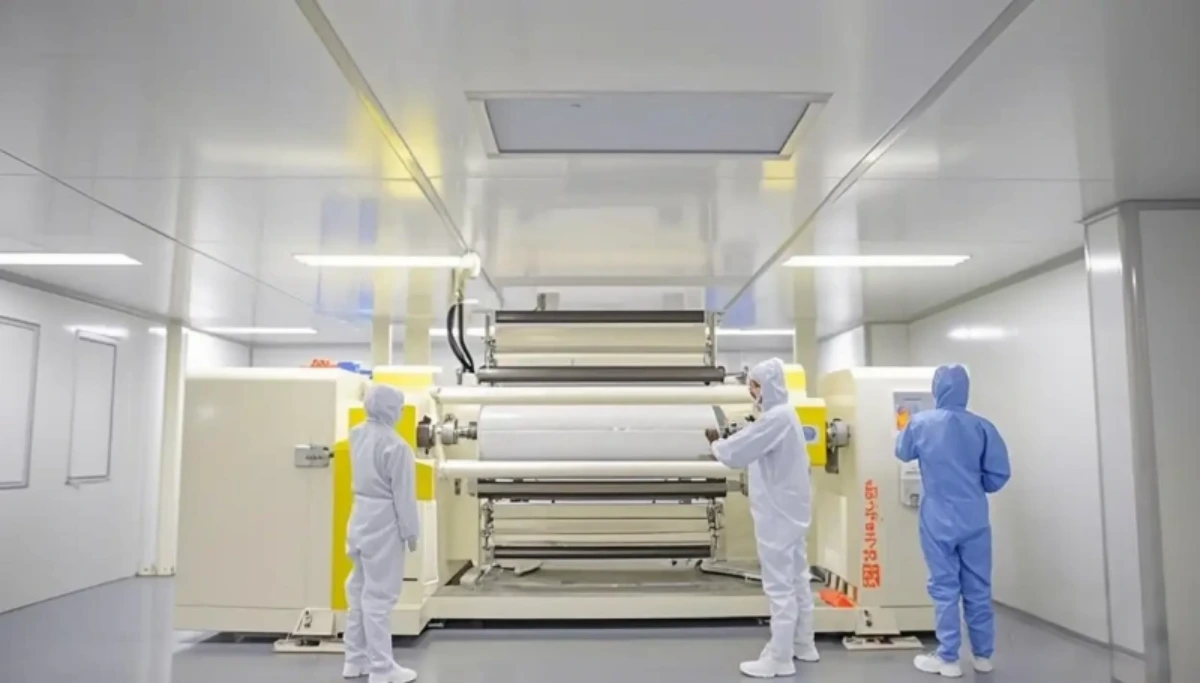
The cutting-edge technology research and development of PPF:
- AI-Driven Material Design – Generative adversarial networks (GANs) create novel TPU formulations with tailored mechanical and thermal properties.
- Biodegradable Conductive PPF – Carbon nanotube-doped bioplastics enable flexible electronics integration with 2-year composting capability.
- Bio-Based Adhesives – Plant-derived lignin and starch-based adhesives replace petroleum-based alternatives, achieving 100% biodegradability.
- Advanced Pilot Film Extrusion – State-of-the-art pilot lines with commercial-grade precision enable defect-free PPF prototyping and rapid material validation, reducing development cycles by 40%.
- High-Aspect-Ratio Nanofibers – Electrospun TPU nanofibers with 100:1 aspect ratio enhance puncture resistance by 400% in industrial applications.
- Nano-Ceramic Reinforced PPF – Zirconia and alumina nanoparticles increase PPF hardness to 9H while maintaining 85% transparency.
- AI-Driven Process Optimization – Reinforcement learning algorithms adjust extrusion temperature and pressure in real-time, reducing waste by 60%.
- AI-Powered Predictive Maintenance – Machine learning models analyze sensor data to predict PPF degradation, scheduling replacements before failure.
- Ultra-Thin Nanocoatings – 6-micron films with nanocrystalline structures match 10-micron PPF impact resistance while reducing material usage by 40%.
- AI-Optimized Formulations – Machine learning models predict material performance across 10,000 TPU variants, accelerating R&D cycles by 60%.
The materials and technologies of PPF:
- The core substrate is thermoplastic polyurethane (TPU): It is highly flexible and impact-resistant, serving as the fundamental material for PPF to provide protection and self-repair capabilities, outperforming traditional PVC.
- Anti-static surface treatment: Incorporates permanent anti-static agents to reduce dust adhesion by 70%, extending the time between washes.
- Multi-layer co-extrusion process: Through the co-extrusion of multiple layers of materials, a wear-resistant layer, a buffer layer, and an adhesive layer are integrated, balancing protective strength and adhesion.
- Ceramic coating compatibility: Features a receptive top layer that bonds seamlessly with ceramic coatings, creating a hybrid protection system with enhanced scratch resistance.
- Rapid curing adhesive technology: Enables full adhesive strength development within 24 hours (vs. 48-72 hours for conventional adhesives), shortening post-installation care time.
- Thermochromic color-shifting film: Changes color with temperature variations (e.g., blue at 25°C, red at 35°C), adding dynamic visual appeal.
- Surface hardness enhancement technology: By incorporating nano-ceramic particles into the coating, the pencil hardness of the film surface is increased to 9H level, enhancing the anti-scuff and anti-abrasion performance against hard objects such as keys and sand.
- Nano-ceramic particle infusion: Incorporates 9H-hardness ceramic nanoparticles into the top coat, enhancing scratch resistance against keys and road debris.
The cutting-edge technology research and development of PPF:
- AI-Driven Material Design – Generative adversarial networks (GANs) create novel TPU formulations with tailored mechanical and thermal properties.
- Biodegradable Conductive PPF – Carbon nanotube-doped bioplastics enable flexible electronics integration with 2-year composting capability.
- Bio-Based Adhesives – Plant-derived lignin and starch-based adhesives replace petroleum-based alternatives, achieving 100% biodegradability.
- Advanced Pilot Film Extrusion – State-of-the-art pilot lines with commercial-grade precision enable defect-free PPF prototyping and rapid material validation, reducing development cycles by 40%.
- High-Aspect-Ratio Nanofibers – Electrospun TPU nanofibers with 100:1 aspect ratio enhance puncture resistance by 400% in industrial applications.
- Nano-Ceramic Reinforced PPF – Zirconia and alumina nanoparticles increase PPF hardness to 9H while maintaining 85% transparency.
- AI-Driven Process Optimization – Reinforcement learning algorithms adjust extrusion temperature and pressure in real-time, reducing waste by 60%.
- AI-Powered Predictive Maintenance – Machine learning models analyze sensor data to predict PPF degradation, scheduling replacements before failure.
- Ultra-Thin Nanocoatings – 6-micron films with nanocrystalline structures match 10-micron PPF impact resistance while reducing material usage by 40%.
- AI-Optimized Formulations – Machine learning models predict material performance across 10,000 TPU variants, accelerating R&D cycles by 60%.
AUTOLI(CN) PPF(Paint Protection Film) manufacturer
autoli TPU PPF Applied to all brand car models as Benz、Audi、Jaguar、ford、Alfa Romeo.Our factory cooperates with PPF brand、PPF installer、PPF agent、Auto Detailing service and all so in many countries and regions around the world,like Chile,Australia,Philippines,Iraq,Warranty: 10 years.Our advantages:Large stock of styles for you to choose from;High quality raw materials and advanced technology;SGS, ASTM, REACH, UL and other certifications;Collaborate for Lucrative Returns: Source factory;Efficient production reduces costs.Our factory also provides PPF、Car Wrap Vinyl.
